

The Battle for Yemen - More Than Saudi Arabia’s Fight
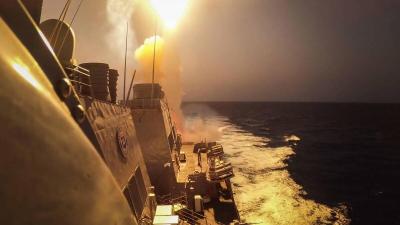
Rome-- The conflict between Saudi Arabia and Yemen’s Iranian-backed Houthis may seem like just another episode in the Middle East’s longest ongoing war, but the Houthi’s continued aggression and expansion threatens Saudi Arabia’s southern security as well as having knock-on effects for wider international security.
As the Houthis have expanded their control over swathes of Yemen’s Red Sea coastline this year, Saudi Arabia’s security concerns have intensified. From their positions in Yemen, the Houthis are able to threaten shipping in and out of the strategically-located Bab el-Mandeb Strait, which connects the Indian Ocean to the Red Sea and Suez Canal and is therefore key to trade and energy security as a major artery for commercial shipping between Asia and Europe. With shipping through the Strait of Hormuz currently disrupted by the conflict with Iran, Saudi Arabia’s ability to continue exporting oil from its Red Sea ports is of major economic importance not only to Riyadh, but globally.
Saudi Arabia has repeatedly called for international support in the face of the Houthi threat, including to protect its energy infrastructure and shipping lanes from Houthi attacks. Last month, after a spate of Houthi aggression including a missile attack targeted at Riyadh, Crown Prince Mohammed bin Salman requested US support against the Houthis. President Trump declined to involve the US in direct strikes against the Houthis in September, instead offering intelligence and targeting support. It was only in March last year that the US launched an expansive military operation against the Houthis, only for the US and Houthis to agree to an Omani-brokered ceasefire deal between the US and the Houthis two months later. While the deal put an end to US-Houthi hostilities, the wider Yemeni crisis remains unresolved and the Houthi-Saudi conflict continues to escalate. The situation demonstrates the limits of deals designed to defend US shipping specifically rather than restore security in the region more broadly
The White House is walking a fine line between avoiding being dragged into another drawn-out regional conflict on one hand and honouring US security guarantees to Saudi Arabia, a key ally and partner, on the other. Other countries watching developments in Yemen and the Red Sea will inevitably be taking note of how the US responds to the crisis, with American credibility potentially on the line if Trump appears unwilling or unable to support Saudi Arabia in the face of major aggression.
While Yemen may be thousands of miles away to decision-makers in the US and Europe, crises in the Middle East rarely stay localised for long. Instability in the Bab el-Mandeb and Red Sea region continue have knock-on effects across Europe, raising shipping, insurance and supply-chain costs, particularly for countries like Italy that rely heavily on trade through the Suez route. This is one reason why the EU launched Operation ASPIDES in 2024 to protect its own shipping in the region, recognising that security in the Red Sea and Bab el-Mandeb is in Europe’s collective interest.
The UK has also taken part in operations against Houthi targets in Yemen alongside the US, as well as continued defence relations and support to Saudi Arabia. But unlike the US, whose support to date has largely been focused on ensuring freedom of navigation, the UK’s military efforts against the Houthis have focused on defence of shipping and degrading Houthi capabilities. It is worth exploring if the UK and its European allies can do more to tackle the threat posed by the Houthis.
The international community can offer support to Saudi Arabia in ways other than entering a conflict in the region, including by intelligence sharing, cooperation on air and missile defence, increased naval operations and efforts to prevent Iran supplying the Houthis with weapons and defence technology. European countries could offer increased logistical and technical support to Saudi Arabia and Yemen’s recognised government, work together on a diplomatic approach, and back reconstruction efforts in Houthi-held areas. These steps would contribute to tackling the security threat posed by the Houthis as well as efforts to achieve a more stable and sovereign Yemen.
For Europe, the Gulf and other Asian countries with an economic stake in the Red Sea and Bab el-Mandeb region, preventing actors like the Houthis from bullying their way into controlling strategically-important swaths of international waterways is of critical importance. Saudi Arabia’s efforts to push back against Houthi encroachment align with Europe’s interests in defending the free flow of commerce and energy, regional stability and ultimately, Yemeni sovereignty.
Whether or not President Trump decides to launch further operations against the Houthis will be key to seeing whether these goals are achieved, or whether the Houthis will continue to dictate terms from Yemen.
Matthew Robinson is Director of the Euro-Gulf Information Centre
© COPYRIGHT ITALIAN INSIDER
UNAUTHORISED REPRODUCTION FORBIDDEN