

Pier Paolo Pasolini: 51 years after his death Rome’s public prosecutor’s office reopens the case
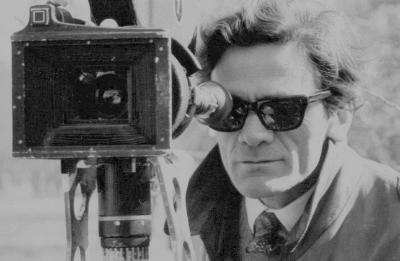
Rome – Exactly 51 years after the death of the poet, writer and director Pier Paolo Pasolini, on Monday, Rome’s public prosecutor’s office reopened the case of his murder and entrusted it to deputy prosecutor Silvia Santucci.
The intellectual had been murdered at the Idroscalo in Ostia, during the night between Nov. 1-2 1975, making it one of the most controversial legal events in recent Italian history, with debate surrounding the crime even decades later.
Pasolini's lawyer Stefano Maccioni pushed for the case to be reopened multiple times, the last being in May of 2026. Following Italian newscast Rai footage of the time, and three still unidentified DNA profiles, Maccioni believes that the convicted Giuseppe Pelosi did not act alone that night, “We believe that Pino Pelosi has been completely thrown in the way” he commented. Indeed, after Pasolini’s death, objects that belonged to neither the writer or Pelosi were found in Pasolini’s car, consolidating the possibility of multiple culprits.
Maccioni has yet to release the entire content of his request. However, it is known that the lawyer demanded a never-listened-before witness to be considered, possibly providing new insights into the crime.
At the time, 17-year-old Giuseppe Pelosi, known as Pino, was convicted of the crime, and he initially stated that he acted alone. He admitted to having had a fight with the writer, who was found brutally beaten and run over by his own car. Pelosi claimed that the fight had started because he was protecting himself from a sexual advance by the writer.
The convicted then recanted in 2005, questioning once again the reconstruction of the crime, yet following his death in 2017 from a tumor, the case became even more difficult to solve.
However, Pasolini’s murder had often been associated with the writer’s critical political views. He often made inquiries about the relationships between politics, crime, and economic power in Italy; while speculated that Pasolini could have been drawn to the place of the murder with the promise of being returned the missing film reels of his movie “Salò o le 120 giornate di Sodoma”.
The fate of the case now lies in the hands of Rome’s judiciary, in the hope that after half a century, the question of what truly happened in Ostia that night in 1975, will finally be answered, establishing whether Pelosi did indeed act alone or if there were others involved, and identifying any other individual involved.
VB
© COPYRIGHT ITALIAN INSIDER
UNAUTHORISED REPRODUCTION FORBIDDEN