

Wine world takes stock as Bardolino celebrates bibulous 100th birthday
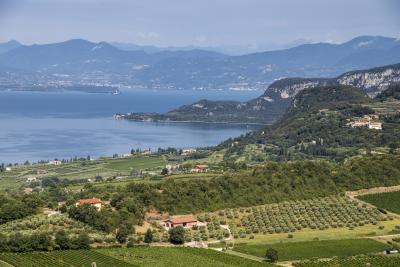
BARDOLINO — With Italian wine producers facing mounting challenges, from global warming to changing lifestyles, wine experts gathered on the shores of Lake Garda this autumn to assess the way forward and raise glasses to celebrate the 100th anniversary of the creation of the Consorzio Vini Bardolino.
The Consorzio was set up in 1926 to protect, promote and regulate the production of wine in the Bardolino area on the eastern shores of Lake Garda, an activity that dates back to ancient Roman times.
That year saw Benito Mussolini survive an assassination attempt by Irishwoman Violet Gibson, put an end to democratic government in Italy by arrogating to himself the right to pass laws without parliamentary approval, abolish local democracy and ban all opposition parties. And the foundation of Napoli football club.
The Consorzio is the third oldest in Italy, following the creation of a consortium for the protection of Chianti Classico in 1924 and for Valpolicella, also to the east of Lake Garda, the following year.
A century later Italian wine producers are wrestling with the tendency of young people to eschew alcoholic beverages on health grounds, dry and baking hot summers, and tougher drink drive rules recently introduced by the Italian parliament.
The Wine Observatory of the Unione Italiana Vini (UIV) has reported a global decline in wine consumption from 2019 to 2025 of around 16 per cent. Last year the Italian wine sector generated 16.7 billion euros in direct revenue, but the sector is believed to be responsible for overall revenue generation of around 40 billion euros, or as much as 2.1 per cent of Italy’s GDP, so the stakes are high.
Carlo Flamini, the head of the observatory, attributed declining consumption in Italy to demographic and sociological changes, as well as an ongoing economic crisis.
Women were liable to have their first child at the age of 33, while large families were being replaced by childless couples with pets, Flamini told a conference hosted by the consortium in the picturesque town of Bardolino. Rather than eating at a table in company and washing down food with a glass of wine, people were eating on the sofa or in bed and accompanying their meals with soft drinks, he said.
“Bardolino sells to the countries whose populations visit Lake Garda. It’s important to propose the wine to tourists while they are here,” Flamini said.
He suggested tourists should be offered a complimentary bottle of the local wine in exchange for taking a selfie, so that they spread the word on social media and remembered the product when they headed out to the supermarket back home.
The UIV predicts further declines over the next decade, with an overall fall in wine sales of 1.8 per cent and 2.3 per cent for red wines. Only the top luxury segment could look forward to a 0.8 per cent rise, Flamini said.
Paradoxically, Bardolino wines — light reds and a popular rosé known as Chiaretto — are well placed to face the new circumstances. They meet modern tastes with relatively low alcohol content and are protected from the consequences of drought and heat by the mitigating effects of Italy’s largest freshwater lake.
The lake abuts on Alpine peaks to the north and spreads out among gently sloping fields in the south, where a Mediterranean microclimate supports citrus trees, palms and olives.
“Climate change enables us to harvest earlier, in September rather than October, and improves the quality of the grapes,” said Fabio Dei Micheli, the president of the Consorzio. “And we have the water reserves from the basin of Lake Garda. Things are much more difficult in southern Italy.”
Dei Micheli said wine tourism was on the increase and local producers benefitted from tourism, with some 15 million people visiting the southeastern shores of Lake Garda every year.
Thirty per cent of production was sold locally, he said, while 60 per cent was exported abroad. “Especially to countries like Germany and Switzerland, who provide the biggest tourist flows and are also the top export destinations for the wine, because people like to drink at home the wine that they enjoyed on their holiday.”
Costantino Gabardi, a wine counsellor for the consortium, said Bardolino’s terroir was “one of the few unreproducible ecosystems existing in the world of wine,” with the lake acting as a climate mitigator and ancient glaciers having deposited a fertile mix of rock and sediment in the area.
Successful wine production was also important for preserving the natural beauty of the land around the lake, sculpted with vineyards and olive groves and studded by the occasional cypress tree.
“We operate in a narrow strip around the lake. If the wine industry doesn’t work, the vineyard will become a villa with a swimming pool,” Gabardi warned.
jp-ppw
© COPYRIGHT ITALIAN INSIDER
UNAUTHORISED REPRODUCTION FORBIDDEN