

Sapienza launches Mediterranean project to link cultural heritage with education and employment
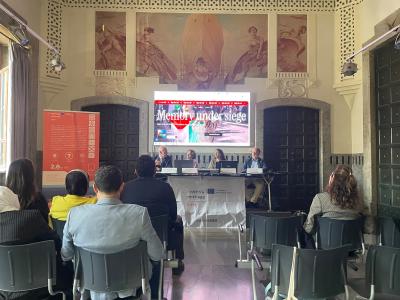
Rome — Sapienza University of Rome has brought together partners from six Mediterranean countries to improve access to education and employment in the cultural heritage sector, launching a new initiative as the destruction of historic sites in conflict zones highlights the importance of protecting cultural memory.
The university presented its DIEM project, Developing Inclusive Education in the Mediterranean, in Rome on Thursday, outlining a programme designed to bridge the gap between academic training and the practical skills required to manage museums, historic sites and cultural institutions.
Coordinated by Sapienza’s Department of History, Drawing and Restoration of Architecture and funded through the European Union’s Interreg NEXT MED programme, DIEM brings together partners from Italy, Spain, Tunisia, Egypt, Jordan and Palestine.
With a total budget of €2.8 million, 89 per cent of which is co-financed by the EU, the initiative aims to make professional training more accessible while helping communities turn their cultural heritage into a source of employment and sustainable development.
The project comes at a time when the destruction of historic buildings, religious sites, archives and other cultural assets has become an increasingly pressing concern in conflict zones, including Palestine. Beyond the physical loss of monuments, the destruction of heritage can threaten the traditions, collective memories and connections to place through which communities preserve their identities.
In Palestine, damage to cultural heritage in Gaza and the West Bank has raised wider questions about the relationship between preservation, displacement and the right of communities to maintain their historical and cultural identity. Palestinian heritage encompasses ancient archaeological sites, Byzantine mosaics, Islamic architecture, historic villages and oral traditions passed between generations.
Efforts to safeguard this heritage extend beyond the restoration of damaged buildings. Digital archives, oral history projects, community museums and the documentation of destroyed villages can help preserve memories and cultural knowledge that might otherwise disappear. Local artists and cultural organisations also play a role in maintaining cultural expression, even under difficult circumstances.
Although DIEM is not exclusively focused on Palestine, the inclusion of Palestinian partners places their institutions and professionals within a broader Mediterranean effort to strengthen cultural heritage education and cooperation.
At the heart of the initiative is the recognition that the Mediterranean possesses an extraordinary wealth of cultural assets, yet the opportunities they offer are not always accessible to the communities living alongside them. DIEM seeks to address this imbalance by connecting universities, cultural organisations and training centres across the region.
The project began with 18 workshops held across the six participating countries, bringing together universities, public bodies, professionals and private organisations to identify gaps between academic preparation and the practical demands of the sector.
Participants highlighted the need for stronger training in management, project design, digital tools, communication and community engagement. They also called for more flexible learning opportunities to support both young graduates entering the workforce and professionals seeking to update their skills.
The findings have informed the development of DIEM’s training programmes and initial guidelines intended to encourage greater consistency between educational pathways and the recognition of credits across participating countries.
“Cooperation between universities, institutions and heritage professionals allows us to build training programmes that are closer to the real needs of people and territories,” said Carlo Bianchini, the project’s scientific coordinator for Sapienza.
“With DIEM, we want to circulate knowledge and experience between the two shores of the Mediterranean, training professionals capable of caring for heritage and making it a resource for communities. Education is the starting point for giving continuity to this process,” he added.
A key component is the international Training of Trainers programme, which began online on 29 September and attracted more than 180 participants. The programme is aimed at lecturers, researchers, museum and heritage-site managers, professionals and institutional representatives.
It comprises 40 hours of online training in English, delivered by international experts, alongside practical activities focused on developing management and communication plans for pilot sites. An international workshop in Jordan, planned for spring 2027 for selected participants, will provide further opportunities for practical work and collaboration.
The programme follows a cascade model, under which participants are expected to pass on their knowledge to other professionals and local communities. The longer-term ambition is to establish a network of people and institutions able to share expertise, adapt approaches to local circumstances and continue working together beyond the project’s duration.
For Palestine, where cultural heritage is closely connected to questions of identity, historical continuity and displacement, such cooperation offers a potential framework for strengthening professional skills and supporting community-led preservation. Training alone, however, cannot prevent the destruction of heritage in conflict zones or resolve disputes over its protection. Preservation efforts also depend on access to sites, adequate resources, legal safeguards and accountability for damage.
DIEM’s wider Mediterranean approach reflects the importance of treating cultural heritage not simply as a collection of historic buildings and objects, but as a living resource shaped by the people and communities who maintain it.
By linking education with practical experience and cross-border cooperation, the project aims to equip a new generation of professionals with the skills to protect cultural assets and ensure that their social, educational and economic value can be shared more widely.
PS
© COPYRIGHT ITALIAN INSIDER
UNAUTHORISED REPRODUCTION FORBIDDEN