

Autonomously-driven AI warfare cannot remain unregulated, says EGIC panel
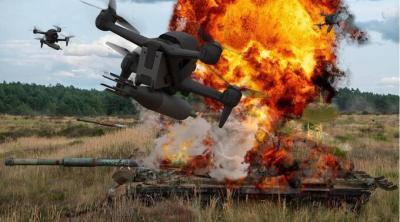
ROME -- Amidst the global fervour of interest in grave warnings about the safety of AI, the Euro-Gulf Information Centre (EGIC) gathered to discuss the rise of autonomous AI-led warfare.
EGIC’s panel highlighted the sudden rise of autonomous weapons and AI in contemporary warfare. Dr Fabrizio Cilli in particular argued that new, largely autonomous systems present heavy risks of an adversary being able to remotely control such systems through cyber warfare and these systems for their own purposes.
Despite the perception which some might hold, that autonomous, AI-driven weaponry is a technology of the future, Dr Cadonici drew attendees’ attention to areas in which Lethal Autonomous Weapon Systems (LAWS) had already been used. Beginning as early as 2020 with Turkey’s use of LAWS against General Haftar in Libya and then emerging into the mainstream in recent years.
Lethal Autonomous Weapons Systems, Cadonici proposed, have been deployed to find targets in conflict areas such as Gaza, Iran, and Ukraine. Indeed, it was noted that within the first three days of the United States’ recent attacks in Iran, over 2,000 targets had been identified through the use of Palantir’s Maven Smart system.
The panel moved on to discuss the implications on how this changes the nature and targets of warfare. Already, critical AI infrastructure, have been come targets in contemporary warfare. Just last month, the USA targeted an Iranian state-run bank’s data centre in Tehran. Similar strikes were carried about by Iran in the Gulf region, in March 2026 Iran targeted Bahraini and Emirati data centres, belonging to Amazon Web Services, treating them as critical assets in a similar vein to the oil fields and US military sites.
Furthermore, the rise of the essential role played by AI-technology, seems to have transformed the way in which military adversaries view corporate, non-state actors as legitimate targets. The Iranian regime later publicly stated that it had targeted Amazon’s data centres because it views Amazon and its technology as a crucial support to the US military’s functioning.
The panel then moved on to what problems this recent transformation presents from an accountability, governance, and safety perspective. Imane Hmiddou, a University of Bologna researcher into AI ethics and governance, raised the question of how far can accountability be guaranteed when it comes to the military use of largely autonomous technology. She posed the pressing question that, even if there is supposedly a human agent checking an AI’s targeting process, how much of this can they ever check, and can full accountability really be said to rest with the human agent at the end of this process.
Given recent warnings about the growth of self-improving, or fully autonomous AI, there was a further interest in if, and how, AI could become ‘rogue’ in a military setting. Dr Cilli, a cybersecurity expert, formerly a core-team member of OWASP GenAI’s globally-leading team on LLM security, contended that as it stands no AI system has the “intent” to go down a ‘rogue’ path.
What options, then, does this leave global governance on military Artificial Intelligence? Within a European Union context, Dr Cadonici emphasised that the EU does not currently have a regulatory regime for Lethal Autonomous Weapons Systems (LAWS).
The European Union’s Permanent Structured Cooperation (PESCO) framework has not yet found a place for LAWS regulation, leaving it entirely in the lap of member states. It is possible this may change in the future, given Europe’s increase in military spending, and several members states’ aims to bolster its defence through looking to increased ‘lethality’ without large troop increases.
The panel ended by looking to the global future of the regulation of AI and LAWS and if a global treaty consensus on the issue, comparable to nuclear non-proliferation, might ever be reached. Imane Hmiddou raised the need to govern AI use in the military at the international level, which she argued would most likely require a hegemonic actor using its power responsibly and collaboratively to effectively persuade other states to follow.
ew-khg
© COPYRIGHT ITALIAN INSIDER
UNAUTHORISED REPRODUCTION FORBIDDEN