

Appetizing Alghero becomes a foodie destination

ALGHERO, Sardinia-The local cuisine of the city combines Sardinian traditions with a Catalan influence and a focus on seafood and local vegetables, especially artichokes. From famous French tire company-recommended restaurants on their way to a starry future, to the local sandwich shop at the port, Alghero has a lot to satisfy the palate of any visitor.
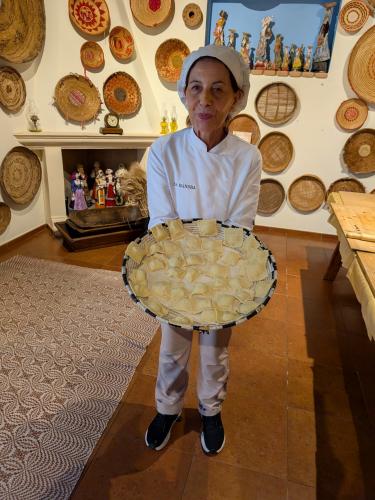
The food tour began with a visit to an agriturismo, Sa Mandra is a great intro to the cuisine. The owners Rita and Mario moved to Alghero from a place called Barbagia, in the interior of Sardinia which is known for its true Sardinian traditions in woodworking and leatherwork. They bought a property and started to raise sheep, but after a few rocky years of fluctuating butcher and dairy prices, Mario said, “We decided to take our products directly to the people” by opening a agriturismo.
Sa Mandra opened in 1993 with a property that stays true to Sardinian traditions. Rita said, “We took our culture from Barbagia with us.” The property itself was like a museum, displaying traditional farm and cooking equipment and several “pinnettos” - stone buildings with thatched roofs that historically shepherds could use for shelters.
Before lunch, we had a tour of the property when we noticed a huge outdoor fireplace that already had whole suckling pigs roasting which gave off an appetizing aroma. Next, Rita brought us into the kitchen where we made some fresh pasta for lunch. She taught us how to make Sardinian gnocchi and ravioli with lemon ricotta. It was my first experience, and our instructor was very patient, helpful, and effective. By the end of the course, I felt that I had learned a new and delicious skill. After all our hard work, we were ready to enjoy the fruits of our labor.
By noon, their Michelin-recommended restaurant was already full of large tables. Our lunch was outstanding. As a true farm-to-table restaurant, every course was extremely fresh, starting with the traditional chesses and prosciutto followed with our freshly made pastas in a ragu sauce. The next course was the roast pork which tasted even better than it smelled. Finally, we concluded the meal with a traditional local dessert, seada, a fried pastry filled with pecorino cheese and lemon zest, topped with honey.
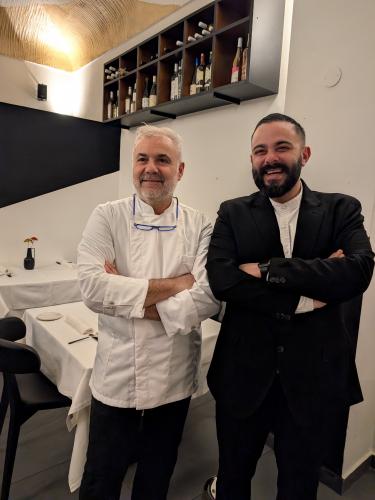
Dinner was back in the city at the contemporary restaurant Musciora. A father and son team who created a tasting menu that combines local traditional flavors from the father with the modern design influence from the son. The father and chef, Tonio Delrio, said, “My philosophy is always using local produce at the highest level with local recipes.” The Michelin-recommended restaurant offers three tasting menus: one focused on land, the second on seafood and the third is a combination of the two.
The combination menu that I tasted consisted of what was available from their suppliers that day and was accompanied by multiple local, small producer wines. The standout dishes were the seared pork belly, an Algherese onion soup with croutons, highlighted with a fried egg yolk, and the fresh mackerel marinated with burnt aubergine sauce and organic orange.
The food tour continued the next night at La Saletta, another innovative Michelin-recommend restaurant, which was like a battle between two chefs, Gian Luca Chessa and Adriano Zucca. Adriano wanted to showcase the food from Sardinia’s interior with meat specialties, and Gian Luca, who grew up on the coast, wanted to highlight the seafood of Alghero. During the presentation, the good friends spent some time giving each other a hard time, as brothers do, which added some color to the experience.
My favorites from the tasting menu were the warm pork broth served in a snifter which had a charming presentation; the local oyster served three ways together, including raw oysters, oyster soup and 90-day fermented oysters, which all together had contrasting flavors; the lamb that was slow cooked for 20 hours and rolled into a cylinder and stuffed with its offal; and finally, a modern Crema Catalana, the signature dessert of Alghero.
The Catalan influence in the city stems from the 14th century when the Crown of Aragon colonized the area, expelling the Genoese. This event led to a legacy visible today in the city’s language, cuisine, and Architecture.
An example of this influence was represented at Trattoria al Refettorio, located in the historic center and run by Chef Cristiano Andreini, was a welcoming place for dinner. The standout plates were the fresh tuna dressed with tiny grilled vegetables and fruit, the fish pasta paella which was served fresh out of the pan tableside, and the main which was grilled octopus with a strong smoky barbecue flavor. The meal concluded cream Catalan and mango gelato over chocolate crumble.
For a favorite Alghero casual lunch spot, we visited Focacce del Milese. Their signature sandwich starts with a large rectangular piece of thin bread (focaccia) which is then layered with sliced tomatoes, tuna, hardboiled eggs, a few anchovies, rocket salad, and finally pancetta (pork belly). All these toppings are then seasoned in a secret special sauce created by Maria. You can easily watch them make these gigantic sandwiches behind the counter.
They also prep other varieties of focaccia sandwiches. Focaccia Fresco is made from tomato, prosciutto cotto, mayonnaise and salt. Focaccia Contadina has grilled eggplant, pepper, bacon, garlic, olive oil, parsley and salt. There are many other options, including a vegan one, but the original Focaccia Milese continues to be the top seller.
The bar was purchased in 1971 by Antonio Gavino Fiori and his wife Maria, who had just returned from Australia after emigrating there years before. They decided to keep the name of the bar from the previous owner, and the most frequent customers were fishermen before heading out to sea. Their history is captured in a book by Pasquale Porcu with the stories of people who helped build the business, along with black and white photos from the past. Today, they are a staple of Alghero and well worth a stop for a quick bite.
After experiencing all of these restaurants, I can confirm that Alghero has arrived as a foodie destination worth adding to the rotation of any Mediterranean traveler’s agenda. Local and fresh ingredients combine with Italian standards in a historic city with a clear Caribbean-like blue water backdrop.
© COPYRIGHT ITALIAN INSIDER
UNAUTHORISED REPRODUCTION FORBIDDEN