

Spending 48 Hours in Muscat
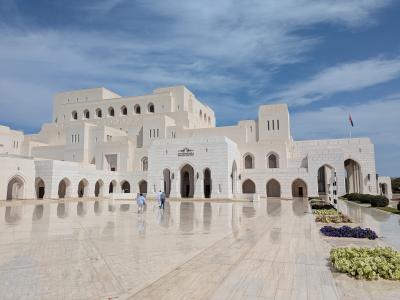
MUSCAT - Located in between the Gulf of Oman and the Hajar mountain range is Muscat, the capital of Oman. The old city, Mutrah, is inviting with its Corniche, Mutrah Souq and fish market. The more modern part of Muscat holds attractions such as The Grand Mosque and The Royal Opera House. Along with all these sites the friendliness of Omani people stands out as the best attraction.
The hospitality of the Omani people is remarkable. On my way back to the hotel from the museum, I decided to take a bus, and when I saw the bus pass me, I realized it would be turning around soon and that I was in between bus stops. So, I decided to make a run for it. Thinking that I was in distress, a local Omani man with his family pulled up next to me in a giant white SUV and asked if I needed assistance. Understanding the situation, he said, “Get in,” and off we roared to the bus stop. He introduced me to his wife and daughter who were also happy to help.
At the bus stop, I realized I had only a credit card to pay for the bus. The driver stated that the machine was out of order and that I needed local currency for the ride. After some back and forth and my story about running to catch the bus, a local man in the front seat reached over and paid my fare. He accepted my thanks, and we were on our way. I cannot remember traveling in a country where the people were so hospitable.
The city’s success is based on its location as a strategic trading port throughout history. The Portuguese redeveloped forts here during the 16th Century that overlook the port and the city center. Today, some of them are museums and provide great views of the city.
At the far end of the Corniche is the Mutrah Fish Market - open every day, closing at 1pm. The market is a great opportunity to see locals and restaurants selecting fresh fish each day. They do not mind having their photos taken. The Corniche itself provides great views of the old city, both during day and night, and leads you to the Mutrah Souq. The souq is one of Oman’s most famous traditional bazaars offering a blend of traditional goods and products at reasonable prices. A traditional souvenir is frankincense, an aromatic resin used in incense and perfumes which is found in the Boswellia tree, abundant in Oman.
The Royal Opera House is well worth a trip even without a performance. The management offers tours during the day explaining the construction and design of the theater which was completed in 2011. The tour finishes in the seats in the front row so you can get an idea of where you would like to sit during a performance. The prices seem very reasonable for the performances as well.
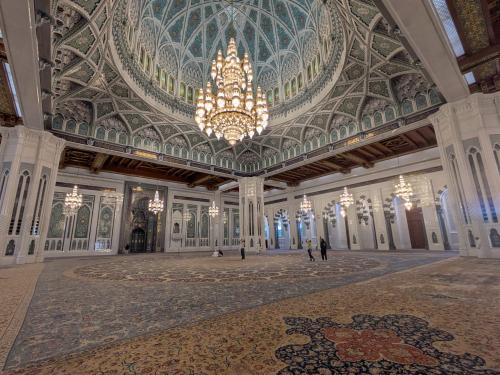
The Grand Mosque is open to visitors and is a must-see. Completed in 2001 as a gift from Sultan Qaboos, the Mosque is in Greater Muscat outside the center. The main prayer hall is striking and contains the largest chandelier in the world, weighing 8.5 tons with 600,000 crystals. The chandelier hangs over the second largest carpet in the world. The Persian handmade carpet took 600 workers over 4 years to make and weighs 21 tons.
The first hotel in Oman was constructed in 1970 during the Renaissance in Oman. This is when the country opened to foreigners in modern times. This occurred after a coup d’etat when the Sultan was overthrown by his son, Sultan Qaboos bin Said. This was a defining moment for Oman, as the new Sultan turned Oman from an underdeveloped backwater country into a modern country with hospitals, roads, schools, and tourism all financed by the countries newly developed oil resources.
There are plenty of great restaurants in Old Muscat. Bait Al Luban serves authentic Omani cuisine in a traditional setting overlooking the Corniche. The suggested main dish was Shuwa, which consisted of marinated meat roasted in an underground firepit for over 6 hours and served with Qabuli rice followed by Luqaimat, fried middle eastern doughballs covered in rose syrup. Most meals in Oman are finished with complimentary dates and coffee with cardamom.
Also located next to the fish market is Aroos Al Bahar Fish Restaurant. As you enter, you order your fish and let them know how you want it cooked along with the level of spice. Then, you order sides which include hummus, garlic naan and rice. After you find a table outside in their courtyard, your food is delivered to you when it is ready. The shrimp and fish were amazing and the price was extremely reasonable.
Most modern hotels are outside the old city and offer modern amenities with a heavy Omani influence. Around the Corniche in Mutrah you will find local hotels in a great location for walking to dinner and to many historic sites in the old city. Early morning prayer calls give you pause and make you remember that you are in the Middle East.
Driving from Abu Dahbi was my choice of travel, although Muscat Airport offers plenty of direct flights. The roads across Oman were in great condition and offered plenty of great detours including the Nakhal Fort built in 1834 to protect an abundant spring and a large date plantation. The fort offers great views over a tranquil setting. There is an abundance of speed cameras so it’s best to not test them (I found out the hard way).
Just over the UAE border is another date plantation worth a stop. The Al Ain Oasis is the UAE’s first UNESCO World Heritage site, which is a free park open to the public with bicycles and scooters for rent. The 150,000 trees are still watered by a 3,000-year-old irrigation system. The park offers a few cafes, and most importantly, a store to buy dates.
Oman’s hospitality and lack of overdevelopment like its neighbor the UAE were the big takeaways from this trip. The country, service, and lack of overtourism made the trip relaxing and refreshing. This place would be worth another visit to explore more of the country.
ML

© COPYRIGHT ITALIAN INSIDER
UNAUTHORISED REPRODUCTION FORBIDDEN