

Judge resigns from Board of Auditors after corruption probe opened into Messina Strait bridge
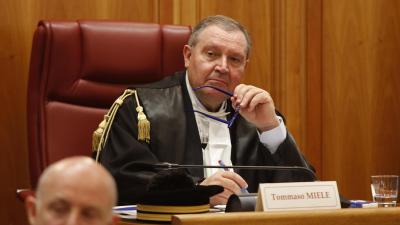
ROME – The former deputy president of the Court of Auditors, Tommaso Miele, resigned from his post as the president of the Board of Auditors of the High Council of the Judiciary (CSM) on Thursday, sources at CSM said, after it was revealed on Tuesday he was one of three people under investigation for alleged corruption to the proposed construction of a suspension bridge across the Strait of Messina.
Rome Public Prosecutors’ Court announced on Tuesday that three people were under investigation for alleged corruption and alleged disclosure of official secrets in relation to the building of a suspension bridge across the Strait of Messina to connect Sicily to Calabria, a decade after the initial project was scrapped due to budget constraints which was revived in 2023 by Minister of Transport and Infrastructure and leader of Lega, Matteo Salvini.
The three people under investigation were named as former judge Tommaso Miele, former deputy president of the Court of Auditors; lawyer Francesco Saccomanno who served as the head of Lega in Calabria between 2021 and 2024 and a member of the board of directors of the Stretto di Messina SpA company which is overseeing the construction of the bridge; and businessman Vincenzo Virgiglio, head of external communications of 'Accademia Calabria', who lives in the same building as Miele.
It is alleged that Saccomanno, 71, and Virgiglio, 65, approached Miele, 70, and at least two other judges in the Court of Auditors in October to act as “moles” within the Court to provide the businessmen with information on the court proceedings while the audit for the project was underway in return for support of Miele’s professional aspirations after retirement, including recommendations and participation in several ‘Accademia Calabria’ business events organised by Virgiglio. Court documents also reveal that Miele allegedly asked Virgiglio to recommend architects that would be willing to provide low-cost estimates for renovation work on his children’s houses.
Miele reportedly provided constant updates on the progress of the proceedings and revealed confidential information about his colleagues’ stances and developments during the Court’s plenary session. He also allegedly used his institutional position to attempt to achieve a favourable outcome of the audit and reportedly produced technical report on behalf of Stretto di Messina SpA, intended to strengthen the company’s defence against the court.
However, the Court of Auditors rejected the plans for the €13.5 billion project in Oct. 2025, citing numerous reasons including missing documentation, lack of compatibility with EU law and the potential increase of original costs by more than 50 percent without a new tender. This led to Meloni’s government having to pass legislation in May 2026 to reset the legal framework for the bridge so work can continue.
The CEO of the Stretto di Messina SpA, Pietro Ciucci, issued a statement in which he said that the company “is completely uninvolved” and assured investigators of “full cooperation.”
The news of the investigation has drawn criticism from the opposition, with Angelo Bonelli of the Green-Left Alliance saying that the project should be halted while the investigation reveals if “we are dealing with a single episode or […] a broader corruption phenomenon”, calling for the €13.5 billion to be “returned to Italians and allocated to the country’s true priorities: healthcare, schools and pensions.”
This corruption investigation is just another small setback in the long process to see the construction of a bridge over the Straits of Messina, which would become the world’s longest suspension bridge if completed. The first plans for the project were drawn up over 50 years ago and the project has been consistently hampered by budget limitations and has repeatedly been criticised for lack of consideration regarding environmental impact, seismic risks, possible mafia infiltration and corruption. Minister of Infrastructure, Matteo Salvini, remains adamant that construction of the bridge will begin this year.
Miele, Saccomanno and Virgiglio remain under investigation. Miele’s attorney, Pier Paolo Dell'Anno, told Italian state media that “in time, it will become clear that my client is completely uninvolved in the allegations.”
khg
© COPYRIGHT ITALIAN INSIDER
UNAUTHORISED REPRODUCTION FORBIDDEN